Money · Expenses
Everybody can file a claim. Not everybody can bill a customer.
Included from Starter upward.
Reimbursement and client billing get governed by the same permission, so either the delivery head cannot claim a taxi or the sales manager can edit what a customer is charged.
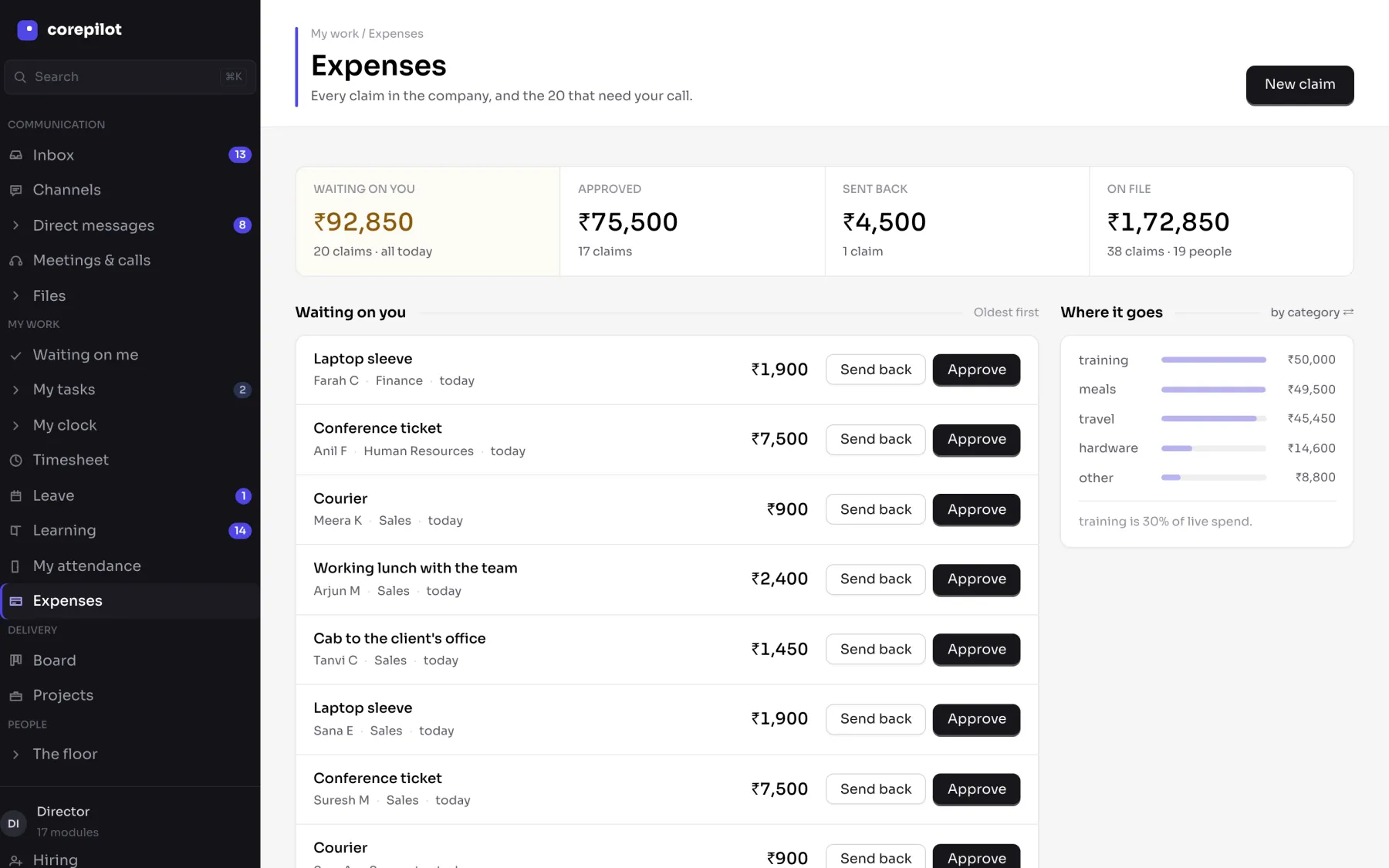
What it does
Claims, approvals and what is billable to a client.
- 01
Filing your own, by default
Nearly every role holds expenses at self scope: you file yours, and the endpoints cannot reach anybody else's.
- 02
Approval as the dividing line
Approving is a separate verb from filing. That is what makes a manager a manager here.
- 03
Billable to a project
A claim can be marked billable and flows into the client's invoice draft with the hours and milestones.
For example
The delivery head claims a taxi without being able to bill a client
- 1Devika files a ₹1,240 cab claim against P-ACME with the receipt.
- 2She holds expenses at self scope — the endpoints cannot reach anybody else's claim.
- 3Her manager approves it. Approving is a different verb from filing, and that is what makes a manager a manager here.
- 4It is marked billable, so it joins the hours and milestones on Acme's next invoice draft.
- 5Reimbursement posts to the ledger alongside it.
While this shared a permission with client billing, seventeen of twenty-two internal roles could not claim a rupee of travel. Splitting it is why they can.
How it runs
In, through, out
A claim is filed with its receipt
A manager approves it
It is reimbursed, and billed on if it belongs to a client
Seventeen of twenty-two internal roles could not claim a rupee of travel while this shared a permission with client billing. Splitting it is why they can.
It does not work alone
What Expenses is connected to
The point of one set of records is that these are not integrations. They read the same rows.
Problems it solves